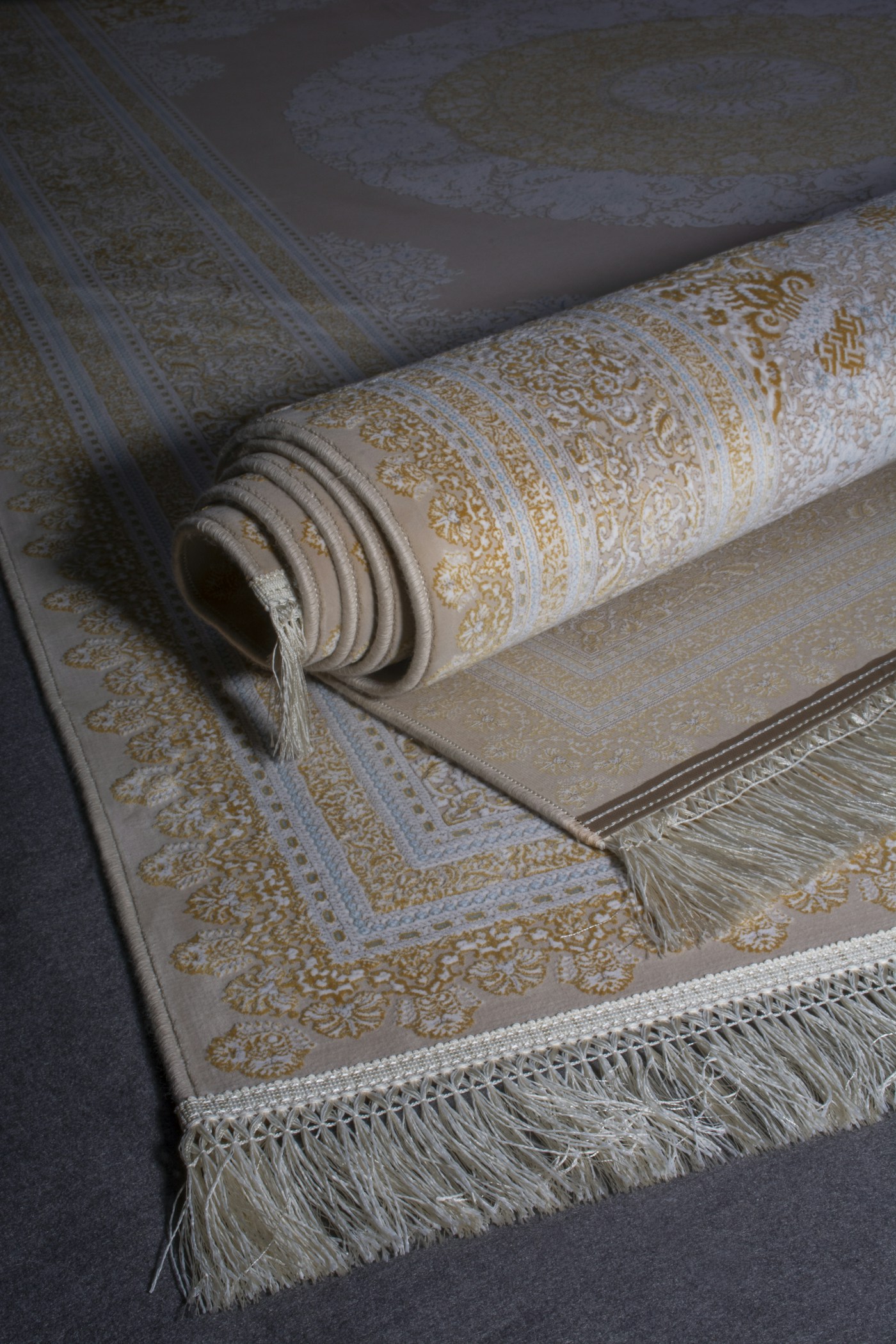
Every hand-knotted rug is a symphony of patience, skill, and artistic vision. To the untrained eye, a Persian rug might simply be a beautiful floor covering. But to those who understand the craft, each piece is a testament to human creativity and dedication. Let me take you inside the weaving process and help you see what I see when I look at a fine rug.
The Foundation: Understanding Knot Density
One of the first things I look at when examining a rug is its knot density—the number of knots per square inch. A typical commercial machine-made rug might have 40-60 knots per square inch. A good hand-knotted rug starts at around 100 knots per square inch. Exceptional pieces can have 300, 400, even 600 knots per square inch.
Now, let me put that in perspective. A rug with 300 knots per square inch measuring 9 by 12 feet contains approximately 4.7 million individual knots. Each one tied by hand. Each one a deliberate decision by the weaver.
When I explain this to clients, I watch their perception shift. Suddenly, they're not looking at a rug—they're looking at thousands of hours of human labor, at an artwork more complex than most paintings, at a meditation on patience and precision.
The Two Main Knot Types
There are two primary knotting techniques used in Persian and Oriental rugs: the Turkish (or Ghiordes) knot and the Persian (or Senneh) knot. Each creates a slightly different texture and allows for different levels of detail.
The Turkish knot is symmetrical, wrapped around two warp threads. It's robust, durable, and creates a slightly thicker pile. The Persian knot is asymmetrical, wrapped around one warp thread and then looped under the next. This allows for finer detail and more intricate designs.
But here's what fascinates me: the choice between these knots isn't just technical—it's cultural. Different weaving communities favor different knots, and you can often identify a rug's origin partly by examining its knotting technique. The knot itself becomes a signature, a fingerprint of tradition.
The Weaver's Canvas: Warp and Weft
Before the first knot is tied, there's the loom setup—the warp threads (running vertically) and weft threads (running horizontally) that form the foundation. The quality and tension of these foundational threads dramatically affect the final rug.
"A rug is only as good as its foundation. Rush the setup, and no amount of beautiful knotting can save it."
I've seen contemporary weavers experimenting with unconventional warp materials—silk, metal threads, even recycled materials—creating fascinating textural effects while maintaining structural integrity. This is where tradition meets innovation, and it's thrilling to witness.
Color: The Chemistry and Art of Dyeing
Color in rugs is its own specialized art form. Traditionally, all rug dyes came from natural sources: madder root for reds, indigo for blues, pomegranate for yellows, walnut husks for browns. These natural dyes age beautifully, developing a patina over time that synthetic dyes can't replicate.
The dyeing process requires deep knowledge of chemistry, timing, and technique. The same plant can produce wildly different colors depending on harvest time, water pH, mordants used, and dyeing duration. Master dyers guard their recipes like family secrets—because that's exactly what they are.
When I examine an antique rug, I can often date it partly by its colors. The introduction of synthetic dyes in the late 1800s created a clear dividing line. Pre-synthetic rugs have a certain warmth and depth to their colors that's immediately recognizable once you train your eye.
Design: Where Mathematics Meets Poetry
Rug designs are not arbitrary. They're based on centuries of evolution, regional traditions, symbolic systems, and often mathematical principles. The layouts follow specific formulas—central medallions with corners, all-over patterns, prayer designs with their characteristic arch.
What moves me most about rug design is the symbolic language embedded in the patterns. Many motifs carry meaning: a tree of life representing growth and connection, a boteh (paisley) symbolizing eternal life, geometric patterns that echo Islamic artistic principles prohibiting representational imagery.
And then there are the intentional "mistakes"—the deliberate imperfections weavers include because, as the saying goes, "only Allah is perfect." These humble breaks in pattern are spiritual statements woven into wool.
Time: The Invisible Element
Perhaps the most underappreciated aspect of rug craftsmanship is time. A fine 9x12 foot rug with high knot density might take a skilled weaver a year or more to complete. During that time, they sit at the loom for hours each day, their hands moving in practiced rhythms, their minds holding the pattern.
This is why I sometimes wince when I hear people dismiss hand-knotted rugs as "too expensive." The price isn't just for materials—it's honoring the time, the skill, the tradition, and the human life poured into each piece.
Reading a Rug: What I See
When I examine a rug, I'm reading it like a text. I look at the back to see the knot clarity—good knotting shows clear, distinct knots on the reverse. I check for color abrash (natural variation in dye lots) which often indicates hand-dyeing. I feel the wool quality—is it lustrous? Does it have the lanolin richness of well-prepared wool?
I examine the edges and ends—these are often where corners are cut in lesser pieces. I look for variations in knot density (suggesting hand work rather than machine precision). I check for repairs, understanding that in antique pieces, careful restoration is often a mark of value rather than a detraction.
The Human Element
But beyond all the technical analysis, what I really look for is soul. Was this made with care? Can you sense the weaver's pride in their work? Does it have that indefinable quality that separates craft from art?
Some of my favorite rugs are not the most perfect ones. They're the ones where you can feel the maker's presence—a slight personality in the color choices, a creative flourish in one corner, the sense that someone poured their creativity into this work.
Why Craftsmanship Matters
In our age of mass production and instant gratification, hand-crafted rugs stand as a powerful counterpoint. They remind us that some things cannot and should not be rushed. They demonstrate that human hands, human patience, and human creativity can produce objects of profound beauty.
When you own a hand-knotted rug, you're not just decorating your floor—you're participating in a tradition that stretches back millennia. You're supporting living artisans and their communities. You're choosing quality over disposability, artistry over efficiency.
That's the poetry of knots. Each one a small prayer. Each rug a monument to human creativity and patience. Each piece a bridge between past and present, between maker and owner, between utility and art.